How to calculate the fuel cost of a road trip
Trip fuel cost = distance ÷ MPG × 4.546 × price per litre. Worked examples in miles and kilometres, plus how to make the estimate realistic.

A 400-mile drive in a car that does 40 MPG needs 400 ÷ 40 = 10 gallons, which is 45.5 litres. With petrol at £1.50 a litre, that's about £68 each way. In short: divide the distance by your MPG to get gallons, multiply by 4.546 to get litres, then multiply by the price per litre.
Or type the distance, your MPG and the price into the fuel calculator for the answer straight away.
The formula in miles
Fuel cost = (miles ÷ MPG) × 4.546 × price per litre
UK pumps price fuel per litre, and one imperial gallon is 4.546 litres. Using the numbers above: 400 ÷ 40 = 10 gallons, 10 × 4.546 = 45.46 litres, and 45.46 × £1.50 = £68.19. For the return leg the total is about £136.
The formula in kilometres
Fuel cost = (km × l/100 km ÷ 100) × price per litre
A 650 km drive at 7.1 l/100 km (about 40 MPG) uses 650 × 7.1 ÷ 100 = 46.2 litres. At £1.50 a litre, that's about £69.
Make the estimate realistic
The arithmetic is easy. The inputs are where estimates go wrong.
Use your measured consumption. Official figures come from a lab cycle and are usually optimistic. If you log your fill-ups you already know your real MPG (how to calculate it). Long motorway trips often come out a little better than your average and mountain routes a little worse.
Use the price on the route. Fuel can cost noticeably more at motorway service areas than in the towns nearby, and prices differ between regions and countries. If you cross a border, check both sides.
Add a buffer. Detours, traffic and air conditioning add up. Ten percent on top is a sensible margin for budgeting.
Splitting the cost
When friends share a car, divide the fuel total by the number of people. Some groups also add a share of the car's other running costs, since tyres and servicing wear with every mile. The cost per mile guide shows how to work that figure out.
Checking it after the trip
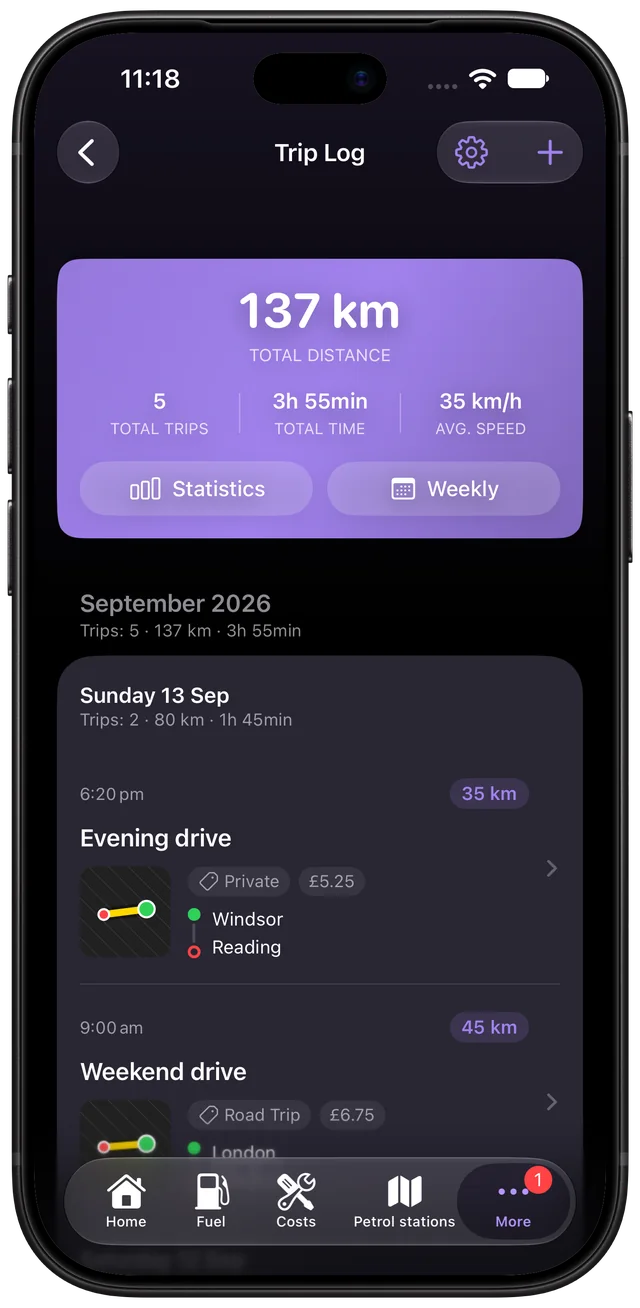
An estimate is a guess. After the trip, compare it with what you actually spent. Fuelio's Trip Log records each trip, by GPS or entered by hand, and gives it a cost based on your average fuel cost per mile or kilometre from your fill-ups (or a fixed rate if you prefer). On iPhone you can also follow a trip on the lock screen while you drive.
Before you leave, Fuelio can plan your route*. It shows petrol stations and their prices along the way, estimates the fuel and cost for the trip from your vehicle's data, and suggests stops that fit your car's range. Fuelio also has a built-in trip cost calculator: enter the distance and it can fill in your car's average or last fuel economy and fuel price, or you can type your own numbers.
If you want to spend less on the fuel itself, see how to find cheaper fuel.
* Part of Fuelio Premium.
Estimate the fuel cost of a trip
- Get the distance. Look up the route length in a maps app. Double it for a round trip.
- Use your real fuel economy. Take the MPG or l/100 km you have measured over recent tanks, not the brochure figure.
- Work out the fuel needed. Divide miles by MPG to get gallons and multiply by 4.546 for litres, or multiply kilometres by l/100 km and divide by 100 to get litres.
- Multiply by the price. Multiply the litres by the price per litre along your route, then add a small buffer.
Questions about this
Does a roof box or a full car change the estimate?
Yes. Extra weight and especially roof boxes and bike racks increase consumption at motorway speeds. If you have a past trip with the same load, use the consumption from that trip.
Should I use the fuel price at home or on the route?
Use the price where you will actually fill up. Motorway service stations are often more expensive than towns a few minutes off the road, so planning stops can lower the real cost.
Learn more: Trip Log